为更年期过渡提供专门护理

获得您应得的中年护理——处方、指导和筛查,帮助您重获自我。

泰勒的区别

Perimenopause & Menopause Relief

潮热。关节痛。不稳定的出血。这些变化通常在月经停止前几年开始。我们帮助您了解正在发生的事情,并找到适合您身体的缓解方法。
Perimenopause and menopause symptom relief care

Whole-Person Care for Midlife

中年荷尔蒙的变化会悄悄地影响您的骨密度、心脏健康和皮肤。获得个性化的预防性护理,以支持您的长期健康。
Preventive midlife and whole-person women's healthcare

Get your care in 3 ways

From expert guidance to medication and health insights — our care meets you where you are.
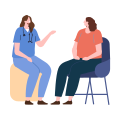
Talk to a menopause doctor
Perimenopause & Menopause Care
Expert advice and treatment plans for your symptoms. In-person or online.
Book a consult
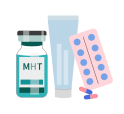
Start or refill menopause hormone therapy
Perimenopause & Menopause Care
Video consults for prescriptions. Medication delivered to your door.
Get HRT
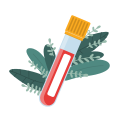
Book a menopause screening
Perimenopause & Menopause Care
Screening for hormones and key health markers like weight and bone density.
View packages

Our approach to care

Focused Menopause Care

Care designed specifically for perimenopause and menopause. Our clinicians are trained to recognise how symptoms across different parts of the body relate to hormonal changes, and to treat them together.

Affordable and Accessible

Consultations cost $74.10 nett, with pricing designed for ongoing care rather than one-off visits. We aim to keep waits short, with a 5-minute maximum wait policy so care is timely and predictable.

In-person and online

Care that adapts to your needs. We meet you where you are — with video consultations when appropriate, in-clinic care when needed, and easy online refills. Women’s health scans, when recommended, are arranged through trusted partner centres.

Your symptoms are real. So is relief.

Joint aches and stiffness in perimenopause

Joints

Midlife weight changes and metabolic health

Weight

Insomnia and disrupted sleep in menopause

Sleep

Hot flashes and night sweats

Hot Flashes

Irregular cycles and menstrual flow changes

Period Changes

Brain fog and mood shifts in menopause

Mood & Memory

Dry skin and hair changes in perimenopause

Hair
& Skin

Vaginal dryness and intimacy support

Sexual Health

Not sure where to begin?

Start with a brief menopause assessment. Our care team will review your responses and guide you on next steps, so your care starts in the right place.

The Taylor Menopause Protocol

Address the root cause

Menopause Hormone Treatment
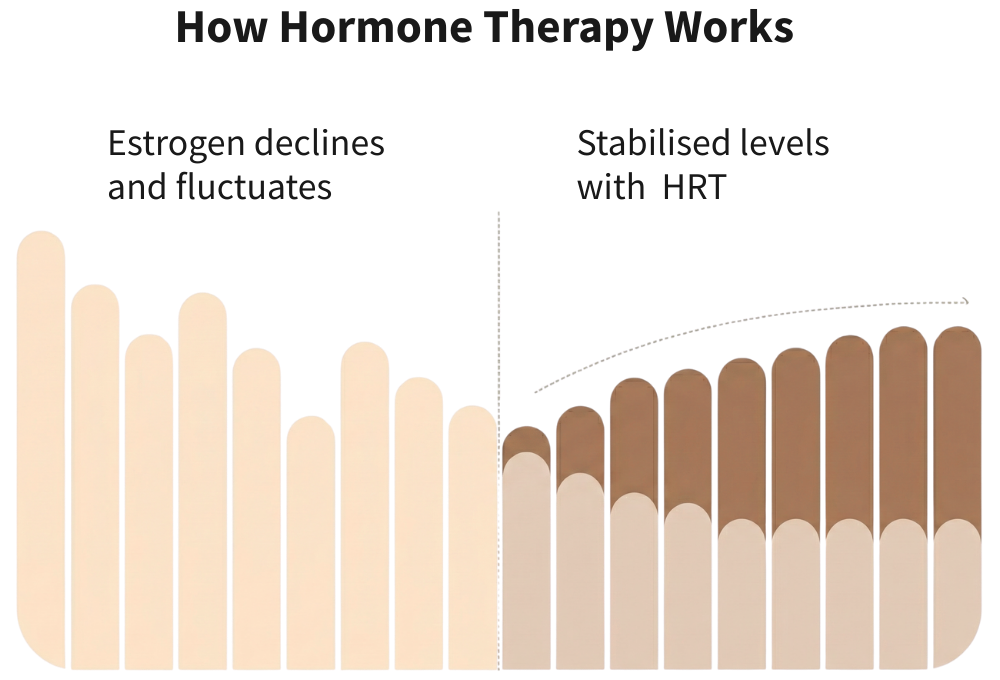
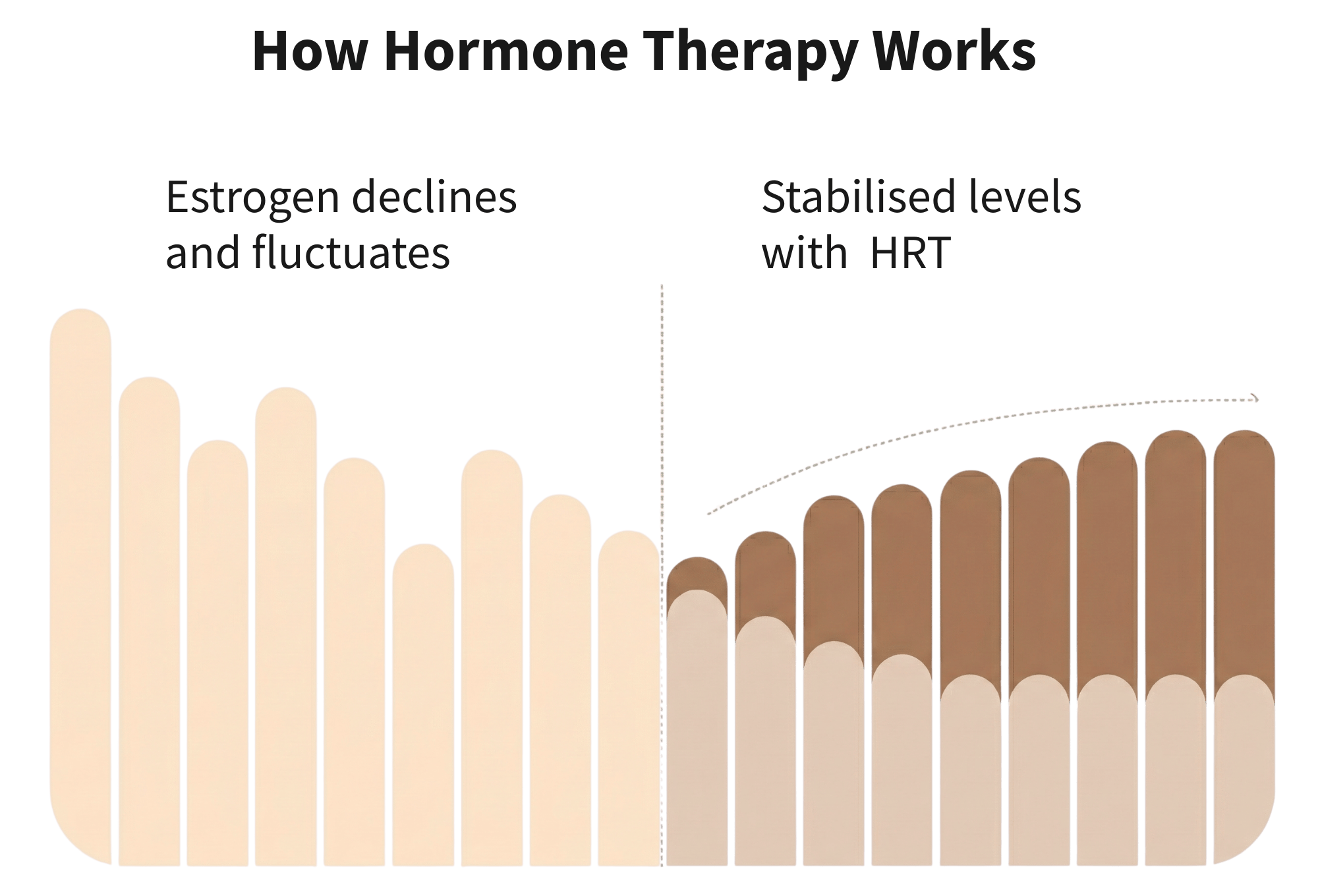
How menopause hormone therapy balances declining estrogen levels
Falling oestrogen can disrupt your sleep, mood, and rhythm—but you don’t have to just accept it. Menopause hormone therapy (MHT/HRT) is designed to replenish these declining levels, addressing the root cause to smooth out fluctuations and bring your body back into balance.
How menopause hormone therapy balances declining estrogen levels

Relief without hormones

Non-Hormonal Medications
Non-hormonal medication mechanism for hot flashes and night sweats
Hormone therapy isn't your only option. These medications recalibrate your brain’s temperature control center to reduce overheating—offering relief from hot flashes and night sweats without affecting your hormone levels.
Non-hormonal medication mechanism for hot flashes and night sweats

Support the whole you

Supplements, Lifestyle & Allied Care
Doctor-led multidisciplinary care team providing allied health, nutrition, and lifestyle support for menopause
Feeling like yourself again starts with looking at the whole picture. That’s why we offer medical guidance on evidence-based supplements and lifestyle strategies, with access to allied health experts like dietitians, physiotherapists, and coaches when needed. Everything is coordinated, so your care works together.
Doctor-led multidisciplinary care team providing allied health, nutrition, and lifestyle support for menopause

The doctors behind your care

The doctors behind your care

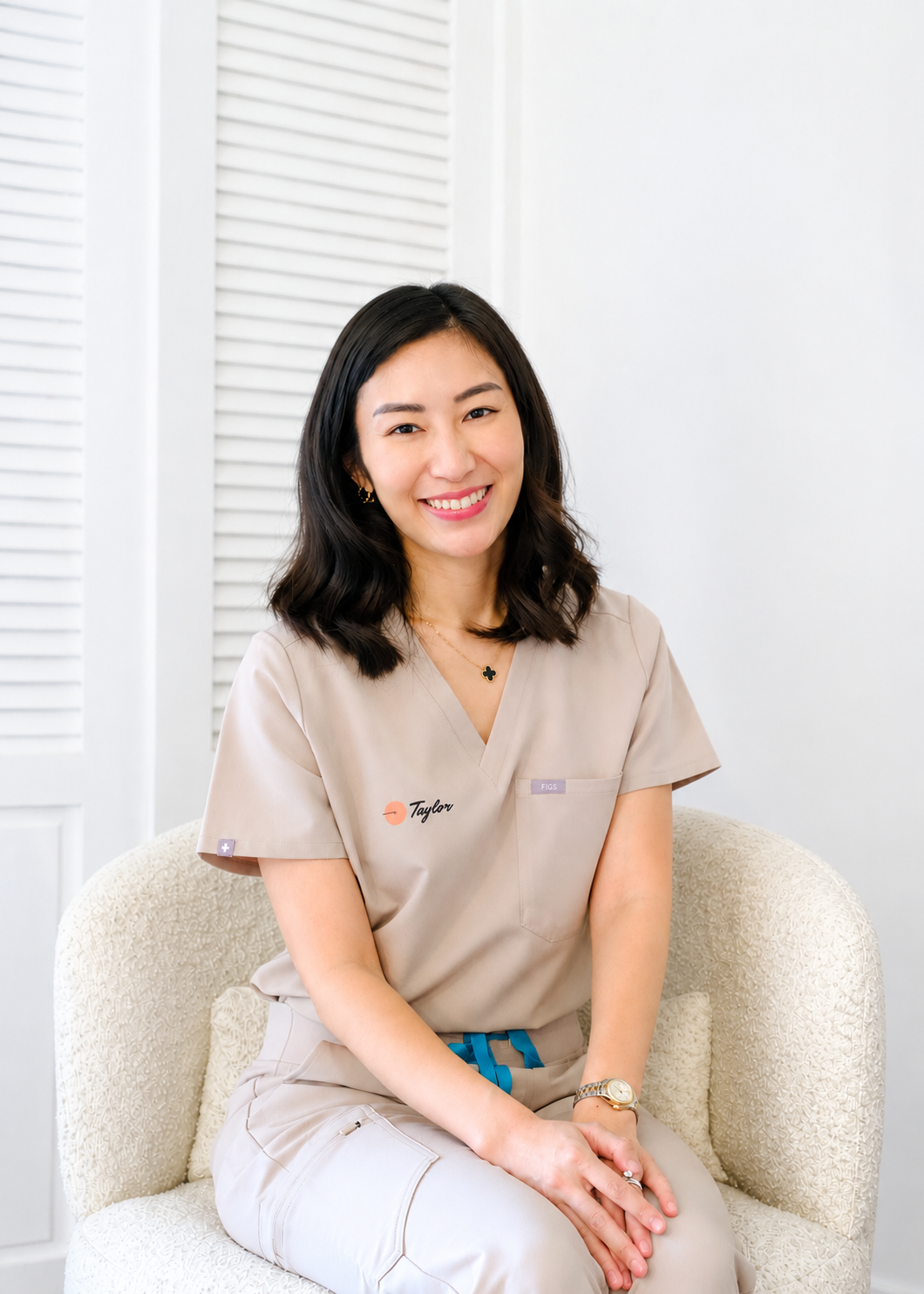
Dr. Jody Paige Goh, Chief Medical Officer and Menopause Doctor at Hey Taylor
Dr Jody Paige Goh
MBBS, GDFM, International Menopause Society IMPART Level 1 Certification
Dr Jody Paige Goh
MBBS, GDFM, International Menopause Society IMPART Level 1 Certification

What Menopause Care Covers

A menopause doctor supports you through the symptoms and changes of perimenopause and menopause, while also looking ahead to the health risks that can emerge in midlife.

Care may include menopause hormone therapy (MHT/HRT), non-hormonal treatments, midlife health screening and lifestyle support.

Our menopause care is led by Dr Jody, Hey Taylor’s Chief Medical Officer. She is a primary care doctor trained in family medicine and gynaecology, with menopause certification through the International Menopause Society. This combination lets her see menopause in the context of the whole patient, from hormones to gynaecological health, chronic disease risk and long-term wellbeing.

Frequently Asked Questions

Medically reviewed by
Dr. Jody Paige Goh, MBBS,
Chief Medical Officer
Last reviewed 11 August 2026

What is perimenopause, and menopause?

Perimenopause is the transition leading up to menopause. During this time, ovarian function changes and hormone levels, particularly oestrogen and progesterone, fluctuate. Periods may become irregular or unpredictable, and women may experience a range of physical, cognitive and emotional symptoms.

Menopause is defined as the permanent cessation of menstrual periods. It is confirmed retrospectively after 12 consecutive months without a period.

Age of menopause: The median age of natural menopause in Singapore is around 49 years, slightly earlier than the commonly cited global average of around 51 years.

Age of perimenopause: Perimenopause can begin two to ten years before the final menstrual period, with symptoms sometimes appearing in a woman's late 30s or 40s.

Early menopause and Premature Ovarian Insufficiency (POI): Natural menopause typically occurs between 45 and 55 years. Menopause occurring between 40 and 44 years is generally termed early menopause. When ovarian function is lost before the age of 40, this is known as POI (KKH Menopause Guidelines; International Menopause Society)

What does perimenopause feel like?

Perimenopause can feel very different from woman to woman. For many, the most general feeling is simply: “I don’t feel like myself.”  Many assume it is just stress or aging.

Here are some common signs to look out for:

  • Cycle changes: Shorter or longer cycles, heavier flow, or skipped periods
  • Sleep issues: Trouble falling asleep, or waking consistently around 3 am
  • Vasomotor symptoms: Night sweats and hot flushes
  • Musculoskeletal symptoms: Joint aches, stiffness, and discomfort
  • Mood shifts: Anxiety, irritability, or low mood
  • Intimate health: Vaginal dryness or discomfort during sex

You do not need to experience all of these. Many women only notice two or three symptoms (British Menopause Society; International Menopause Society;).

Could I still be in perimenopause if my periods are regular?

Yes, while it is common for women to experience changes in their menstrual cycle, you can start experiencing perimenopausal symptoms even if your periods are regular.  

During early perimenopause, oestrogen and progesterone do not decline steadily; they fluctuate unpredictably. These erratic hormone surges and drops can trigger perimenopausal symptoms, even when ovulation is still occurring regularly enough to produce a monthly bleed. A regular period alone shouldn't rule out perimenopause, especially if you're in your 40s (International Menopause Society).

Could I still be in perimenopause if I have never experienced a hot flush?

Yes, absolutely. You can definitely be in perimenopause even if you have never experienced a single hot flush.  

In western countries, the classical symptom of perimenopause is hot flushes and night sweats. However, perimenopause symptoms for Asian women can differ. Based on studies in Singapore, the top symptoms in order are as follows:

  1. New-onset musculoskeletal symptoms (joint aches, pain, and stiffness)  
  2. Disturbed sleep (trouble falling asleep or waking up around 3 am)  
  3. Genitourinary symptoms (vaginal dryness or discomfort)  
  4. Physical and mental exhaustion (fatigue, feeling less motivated than before)
  5. Vasomotor symptoms (hot flushes and night sweats)  

Do I need blood tests or scans to diagnose perimenopause?

Most women experiencing perimenopausal symptoms do not need blood tests to diagnose perimenopause or to start menopause hormone therapy (MHT/HRT). Diagnosis is usually based on your symptoms, menstrual changes and medical history.

However, some symptoms can overlap with other conditions, such as thyroid problems or iron deficiency. Where appropriate, our doctors may recommend targeted blood tests to rule out other possible causes or contributing factors.

If you are in your late 30s or early 40s, hormonal blood tests may sometimes be useful as part of the assessment, particularly when your symptoms or menstrual changes raise the possibility of early menopause or POI (premature ovarian insufficiency).

How do I know if I am suitable for Menopause Hormone Therapy (MHT / HRT)?

For healthy women under 60, or within 10 years of menopause onset, MHT is considered safe and effective for easing symptoms and preventing bone loss
(Australasian Menopause Society). However, MHT may not be suitable if you have any of the following contraindications:

  • Unexplained vaginal bleeding that hasn’t been checked yet
  • Current or past breast cancer, or concerns about oestrogen-sensitive breast cancer
  • Certain hormone-sensitive cancers, such as cancer of the uterus
  • A history of blood clots (for example in the legs or lungs)
  • Recent heart or stroke-related conditions
  • Active liver problems
  • Thickening of the womb lining that hasn’t been treated
  • Very high or poorly controlled blood pressure
  • A known or suspected pregnancy

For most women, you don’t need blood tests to start or continue MHT. We do ask for a mammogram from the past year to check for breast cancer, as having breast cancer would generally mean MHT is not suitable. If you already have a recent mammogram, we’ll review it with you. If not, we can help arrange one before you start MHT.

What can I do if I do not want to take hormones?

If MHT isn’t suitable for you, or you prefer not to take hormones, there are several options to help manage menopause symptoms.

Prescription treatment: Fezolinetant is a non-hormonal medicine that works on the brain’s temperature-regulating system to reduce hot flushes and night sweats.

Vaginal symptoms: Non-hormonal vaginal moisturisers and lubricants can help with dryness and discomfort during sex. (KKH Menopause Guidelines)

Clinically selected supplements: We offer selected supplements that include plant-derived compounds that can act selectively on oestrogen receptors to provide relief for symptoms. We can also offer supplements for specific concerns such as sleep, joint discomfort and hair loss.

Cognitive Behavioural Therapy: Cognitive behavioural therapy (CBT) can help with sleep problems, anxiety and the distress associated with hot flushes.

Weight and metabolic support: Where appropriate, we can also provide nutrition, exercise and GLP-1 medical support for midlife weight and metabolic changes.

Non-hormonal treatments don’t replace the hormones lost during menopause, but they can provide meaningful relief from specific symptoms.

Does perimenopause cause weight gain and what can I do?

Ageing is the main driver of midlife weight gain, while hormonal changes in perimenopause change where fat is stored and make it harder to shift. As we age, we naturally lose muscle, so we burn fewer calories at rest. The same diet and exercise that worked in our 30s may no longer produce the same results.

Perimenopause adds another layer. Falling oestrogen shifts fat towards the belly and can make the body less responsive to insulin, making weight management harder. Diet and exercise still matter, but strength training is key to preserving muscle and metabolic health.

MHT can help by treating symptoms that make healthy habits harder. Poor sleep and joint pain can make it harder to eat well and stay active. By relieving these symptoms, MHT may help with activity, appetite and healthy habits. Some studies also suggest modest benefits for body composition and blood sugar control, but MHT is never prescribed for weight loss alone (International Menopause Society).

The Midlife Weight Management Screening  assesses your metabolic health and body composition. Depending on your needs, this may include dietitian support or prescription weight-management medications such as GLP-1s.

I'm in postmenopause but I still don't feel like myself. What options do I have?

You don’t have to simply put up with symptoms after menopause. Hot flushes, sleep problems, mood changes, vaginal symptoms and other concerns can persist after your periods stop, and there are still treatment options available.

  • Systemic Menopause Hormone Therapy (MHT): For healthy women under 60, or within 10 years of menopause, MHT is generally considered safe and effective when there are no contraindications. Starting MHT later in life requires a more individualised assessment of the potential benefits and risks.
    (International Menopause Society;)
  • Tibolone: A prescription option designed for postmenopausal women that can help with hot flushes and other menopausal symptoms. It has oestrogen-like, progestogenic and androgenic effects. (British Menopause Society)
  • Vaginal treatment: Vaginal dryness, discomfort during sex and urinary symptoms can persist or develop after menopause. Vaginal oestrogen is a highly effective local treatment with minimal systemic absorption and can usually be used long term. (KKH Menopause Guidelines)
  • Non-hormonal options: If MHT isn't suitable or you prefer not to take hormones, options such as fezolinetant, cognitive behavioural therapy and other symptom-specific treatments may help. (International Menopause Society)

How do I know if I should see Hey Taylor, a gynaecologist or a general GP?

Choosing the right healthcare provider depends on your symptoms and the type of care you need:

  • When to see a General GP: A GP is a good first point of contact for general health concerns and routine illnesses, but may not have menopause-specific experience and expertise.
  • When to see a Gynaecologist: A gynaecologist specialises in surgical interventions, for conditions such as severe endometriosis, large uterine fibroids, complex ovarian cysts or post-menopausal bleeding requiring surgical evaluation.
  • When to see Hey Taylor: Hey Taylor provides focused, doctor-led perimenopause and menopause care. Our clinicians assess how hormonal changes may be contributing to symptoms across different areas of health. We offer MHT across 11 licensed options, non-hormonal treatment options and targeted metabolic screening. No GP referral is required.

How much does a menopause consultation and care cost at Hey Taylor?

Test, screen or treatment Price (nett)
Consultation
Consultation, 20 minutes, video or in clinic
Price $74.10
Hormone Testing
Perimenopause Screen Ovarian reserve (AMH), FSH, oestrogen (estradiol), plus a review consultation with a menopause doctor
Price $204.90
In-Depth Hormonal Screening Ovarian reserve (AMH), thyroid (TSH, free T4), FSH, LH, estradiol (E2), prolactin and testosterone, plus a review consultation with a menopause doctor
Price $237.60
Thyroid Function TSH, FT4
Price $43.60
Testosterone
Price $38.15
Progesterone
Price $38.15
Deficiency & Bone Health
Vitamin D
Price $65.40
Comprehensive Deficiency Screen Ferritin, iron, TIBC, % iron saturation, transferrin, vitamin B12, folate, vitamin D, free T4, TSH, magnesium, zinc
Price $263.78
Bone Mineral Density Screen (DEXA)
Price $141.70
Breast Health Screening
Mammogram
Price $239.80
Breast Ultrasound
Price $152.60
Mammogram with Breast Ultrasound
Price $305.20
Menopause Hormone Therapy
MHT Medication (if prescribed) 11 types of MHT including patches, gels, tablets. For a detailed breakdown of MHT prices, see here.
Price ~$60.00 – $70.00 / month
(for oestrogen and progesterone)
If you'd rather not take hormones
Fezolinetant tablets
Price $106.80 / month

All prices are nett and inclusive of GST. Last updated 11 August 2026.

Do I need a referral to see a doctor at Hey Taylor?

No. We are GPs trained specially in menopause and women's health. You can book directly with us (no GP referral is required).

You can visit our clinic at SBF Medical Suites in Tanjong Pagar, or start with a video consultation from home.

Is menopause care covered by MediSave, CHAS, or insurance in Singapore?

Coverage depends on the type of care and your individual insurance or employer benefits.

  • Mammograms & breast ultrasounds: May be MediSave-claimable when performed to investigate or follow up on an existing medical finding, subject to MediSave rules and eligibility.
  • Consultations & general tests: Outpatient menopause consultations and MHT prescriptions are generally not claimable under MediSave or CHAS. They may, however, be reimbursable under some private or corporate health insurance plans. We provide itemised receipts and clinical memos to support insurance claims where required.
  • Screen for Life (SFL) cervical screening: Eligible women can receive CHAS-subsidised HPV screening at our clinic, typically at $5 before GST.
  • MHT / HRT: Most insurance providers do not cover MHT. However, if your employer provides benefits such as Carrot Fertility, you may be able to claim for MHT.

How quickly can I get an appointment?

We offer same-week appointments, with both in-clinic and video consultations available.

We know your time is valuable, so we promise to keep consultation wait times to no more than 5 minutes.

For MHT refills, you generally only need a consultation once a year, unless you need to change your dose or medication. In between consultations, you can request your refill through a free online questionnaire.

Medically reviewed by Dr. Jody Paige Goh, MBBS, Chief Medical Officer
Last reviewed 11 August 2026
围绝经期
更年期
重量
性健康
睡觉
头发和皮肤
Diagram of oestrogen receptors throughout the female body and how perimenopause affects different parts
更年期
雌激素无处不在。
直到不是。
科学课上没有教给我们的东西:雌激素受体存在于人体各处,包括大脑、骨骼、皮肤、心脏等。这就是为什么当更年期雌激素水平下降时,身体、心理和情感症状可能会改变生活。嘿 Taylor 在这里为您提供应有的缓解,并在未来几年内帮助保护您的心脏、骨骼、大脑和新陈代谢。
下一页:重量
围绝经期
更年期
重量
性健康
睡觉
头发和皮肤
Diagram showing fluctuating hormone levels during perimenopause
围绝经期
荷尔蒙过山车
感觉不舒服但还来月经?你并不孤单。更年期症状通常在月经停止前2-8年开始,这个阶段称为围绝经期。在这段时间内,雌激素不会直线下降——它在下降时会发生不可预测的波动。这就是导致潮热、关节痛、睡眠不佳、情绪波动、体重变化和不可预测的经期的原因。好消息?嘿 Taylor 对所有这些都有真正的解决方案。
下篇:更年期
围绝经期
更年期
重量
性健康
睡觉
头发和皮肤
Midlife metabolic changes and hormonal weight gain diagram
重量
重量背后的 “为什么”
激素与中年体重增加息息相关。当雌激素和其他激素开始下降时,即使你的饮食和运动没有改变,你的身体也会发生变化。你可能会比平时感到饥饿,发现更难抓住肌肉,或者注意到体重在你的中间。你并不孤单:87% 的患者表示他们在中年经历过体重增加或身体变化。我们是来帮你回到
下一篇:性健康
围绝经期
更年期
重量
性健康
睡觉
头发和皮肤
Diagram showing the effects of declining estrogen on vaginal tissue, bladder, and intimate health
性健康
不是你,是你的雌激素。
当雌激素下降时,你的私密健康可能会受到打击。雌激素有助于保持阴道、外阴和膀胱组织的健康和良好的润滑。随着中年水平的下降,该组织会变得更薄、更干燥、更敏感。结果?阴道干燥、刺激、尿路感染、持续的尿尿冲动——对于许多女性来说,性生活会变得痛苦。在Hey Taylor,我们用荷尔蒙和非荷尔蒙两种方法来治疗根本原因,这样亲密关系就会再次感觉良好。
下一步:睡觉
围绝经期
更年期
重量
性健康
睡觉
头发和皮肤
Hormonal shifts and sleep disruption during menopause
睡眠科学
激素与睡眠的关系
睡眠问题在围绝经期影响近一半的女性,更年期后超过60%的女性受到睡眠问题的影响。荷尔蒙变化、潮热和与年龄相关的睡眠模式变化只是许多女性发现自己晚上醒着的部分原因。好消息是:解决睡眠问题有益于健康的方方面面,从体重到心脏和大脑,而我们的临床医生有工具可以提供帮助。
下一页:头发和皮肤
围绝经期
更年期
重量
性健康
睡觉
头发和皮肤
Diagram showing how declining estrogen in midlife affects skin elasticity, collagen, and hair growth
头发和皮肤
中年生活,开启全新生活习惯
随着中年雌激素水平的变化,你的身体也会发生变化——对于许多女性来说,雌激素首先出现在皮肤和头发中。你可能会注意到皮肤比平时更干燥、更薄或脱发更多。这是因为较低的雌激素会同时影响胶原蛋白、水分和头发生长。在 Hey Taylor,我们可以帮助您理解这一点。我们的临床医生会根据您的身体现在的需求制定个性化的护理计划,这些计划有科学依据,专为您量身打造。
下篇:围绝经期

您的医疗之家

女性人生的每个阶段都带来了另一个维度,可以揭示自己的身份和生物学。随着她需求的变化,她的医疗之旅再次开始,结束了一个章节,开启了下一个篇章。每个章节都要求在诊所和医院之间移动,与不同的提供者共享和裸露自己的身份,几乎没有明确性或控制力。

现在是时候将她的故事看作一个连续的故事了——一个连接和包容她的人生各个阶段,在就诊之外关心她的健康和福祉,首先照顾她的需求,她的医疗保健并不困难或支离破碎。作为由女性为女性设计的医疗保健提供者,泰勒为她的故事带来了轻松、无缝和赋权。

对她来说,最合乎逻辑的医疗保健类型是她一直以来应得的——一个综合医疗保健提供者,在她的人生转折中,以同理心为她提供全方位的关爱。

对她来说,医疗保健是理所当然的。

Hey Taylor Founding Team - Eve Lee, Dr Jody Paige Goh, Patrina Tan
泰勒的创始团队:
夏娃(首席执行官)、乔迪博士(首席营销官)和帕特里娜
(品牌主管)
泰勒的创始团队:
夏娃(首席执行官)、乔迪博士(首席营销官)和帕特里娜(品牌负责人)
WhatsappEmail


160 Robinson Road, #04-09 Singapore Business Federation Center, Singapore 068914
© 2026 Hey-Taylor Pte. Ltd. All rights reserved.

Thank you!
We'll get in touch really soon.
Oops! Something went wrong while submitting the form.

Let's keep in touch.

由新加坡卫生部许可